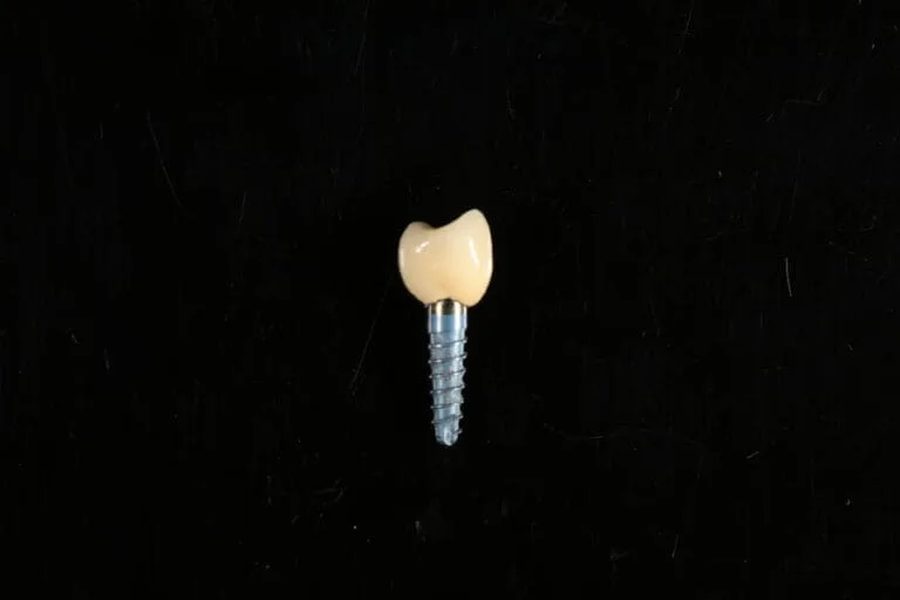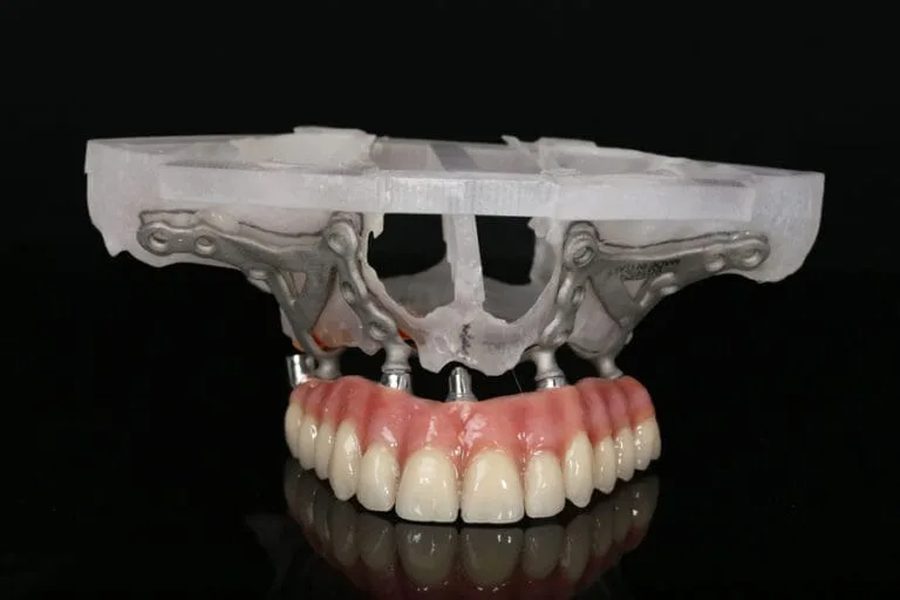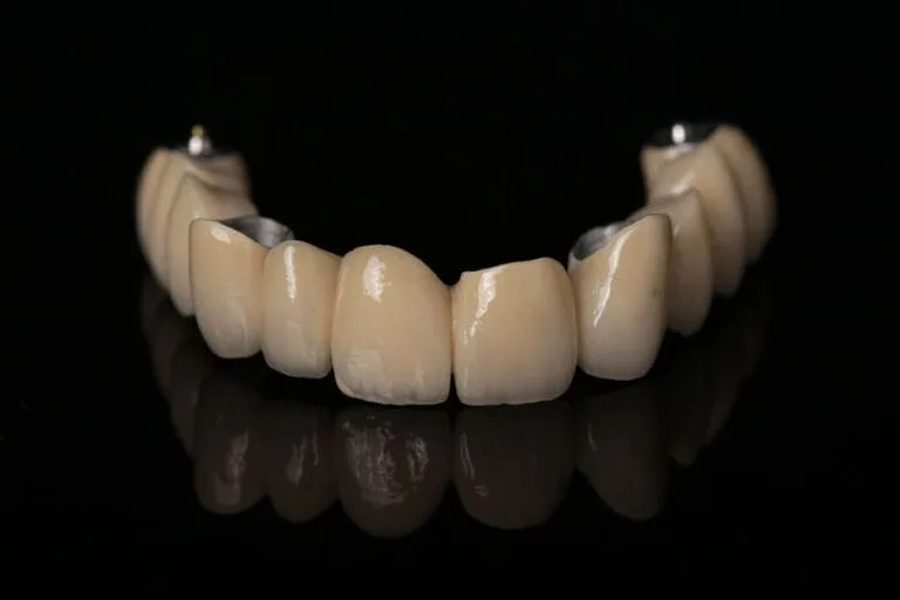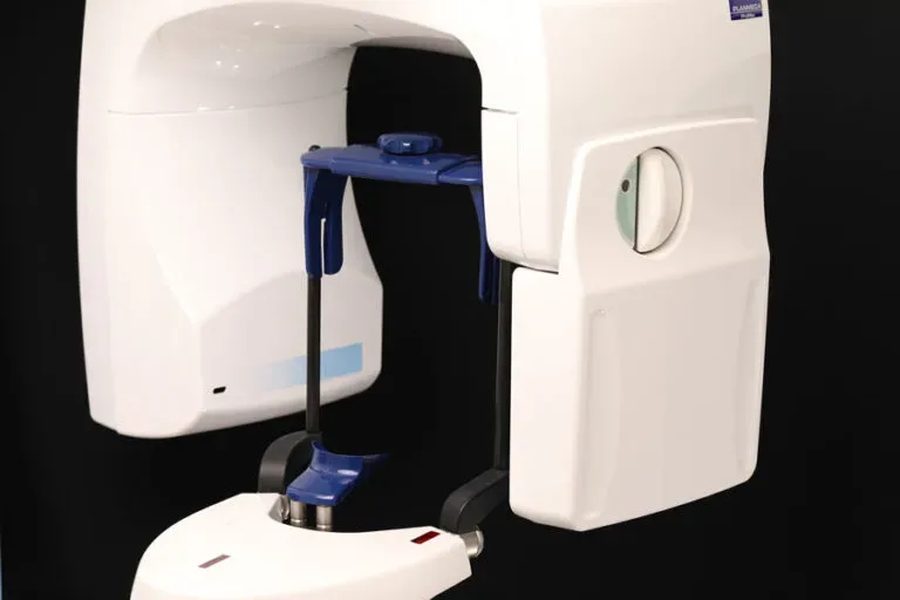
In many cases a dental implant can be placed in the same appointment in which the tooth is extracted. The conditions are clear: intact socket walls, no acute infection and enough bone for the implant to reach sufficient primary stability when it is placed. If they are met, you save one surgery and several months of waiting; if they are not, waiting is the better decision, not a compromise.
Three options: immediate, early and delayed placement
After a tooth is extracted, the bone inevitably shrinks in the first months. It loses the most in the first 3–6 months, mainly on the outer (cheek) side, where the bone wall is thinnest. That is exactly why the timing of implant placement is an important decision and not just a matter of scheduling.
In my practice I distinguish three approaches.
Immediate placement (same day)
I extract the tooth as gently as possible to preserve the bone walls, clean the socket and place the implant into it straight away. Where needed, I fill the gap between the implant and the socket wall with bone substitute. One surgery, one healing period, total time to the final crown 3–4 months.
Early placement (6–8 weeks after extraction)
I wait for the gum to close and any inflammation to settle, while the bone has not yet shrunk significantly. A common choice when the tooth was infected or part of the gum is missing. Total time 5–6 months.
Delayed placement (3–6 months or longer)
The socket heals completely with bone. The most predictable approach for infected or badly damaged sockets; the price is bone loss, which sometimes has to be replaced with a sinus lift or bone graft. Total time 6–9 months, longer with grafting.
Comparison of the approaches
| Immediate | Early | Delayed | |
|---|---|---|---|
| Timing of placement | same day as extraction | 6–8 weeks after extraction | 3–6 months after extraction |
| Number of surgical procedures | 1 | 2 | 2 (3 with bone grafting) |
| Preservation of bone and gum | best | good | poorer, grafting often needed |
| Total time to final crown | 3–4 months | 5–6 months | 6–9 months |
| Conditions | intact walls, no acute infection, stability ≥ 35 Ncm | closed gum, settled inflammation | no special conditions |
| Risk of gum recession | requires experience, thin gum is particularly at risk | low | low |
| Suitable for | tooth fracture, failed root canal treatment without acute infection | infected tooth, thin gum in the front | infected or collapsed socket, major bone loss |
When immediate placement is possible
I do not make this decision by feel. Before surgery I check it on the 3D scan, but the final call comes during surgery, once the tooth is out and I can see the socket.
Conditions that must be met:
- Intact socket walls. Above all the thin outer wall must stay whole; if it fractures during extraction, the implant has no support and the gum recedes later.
- No acute infection. A chronic, quiet lesion at the root tip is usually not an obstacle if I clean the socket thoroughly. A purulent, painful infection with swelling is.
- Primary stability of at least 35 Ncm. This is the torque with which the implant anchors in the bone; I measure it with an instrument during placement. Below this threshold I place the implant but do not load it, or I opt for early placement instead.
- Enough bone beyond the root tip. The implant must extend 3–4 mm into healthy bone below or behind the socket to reach stability at all.
- Healthy gum and reasonable oral hygiene. Smokers and patients with poorly controlled diabetes have more complications with every approach, and with the immediate one the margin is smallest.
If I find during surgery that the conditions are not met, I clean the socket, fill it with bone substitute if needed and place the implant after 6–8 weeks. I tell the patient this in advance, so that a decision made during surgery is not a surprise.
Immediate placement is not the same as immediate loading
These two terms tend to get mixed up in advertising, so I keep them apart.
Immediate placement means the implant goes into the bone on the same day I remove the tooth. There is not necessarily a crown on it yet.
Immediate loading means I attach a temporary crown or bridge to the implant within 24–72 hours. I can only afford this when primary stability is high enough, and even then the temporary crown is shaped so that it does not touch the opposing teeth; it serves appearance and gum shaping, not chewing.
The slogan “fixed teeth in 24 hours” describes precisely immediate loading with All-on-4 and All-on-6: four or six implants in the jaw are connected by a temporary bridge that stabilises them as a unit. A single implant has no such mutual support, which is why I am more cautious with individual teeth. More on who All-on-4 is suitable for.
How we plan immediate placement at Koderman
3D CBCT instead of guesswork
Before every immediate implant I take a 3D CBCT scan (80 €). On it I measure the thickness of the outer bone wall, the amount of bone below the root tip, the position of the nerve or sinus and the angle of the root. A conventional panoramic X-ray does not show this; it is two-dimensional and simply misses a bone wall half a millimetre thick.
Digital impression instead of putty
I take the impression with an intraoral scanner, not with impression putty. For the patient it is more comfortable, for me more precise: the temporary crown can be made before surgery, because I know exactly where the implant will sit.
Guided surgery where it makes sense
For front teeth and where bone is scarce, we make a surgical guide from the 3D scan that steers the implant into the pre-planned position with sub-millimetre accuracy. In simple cases the guide is not needed and I do not charge for it.
What a “screwless” implant means
The phrase “dental implants without screws” shows up in search engines, so it is fair to explain it. Every implant we place in bone is a threaded titanium root; without a thread it would not achieve stability. “Screwless” refers to how the crown is attached: the crown can be screw-retained on the abutment (the screw is hidden under a filling on the chewing surface, and I can remove and service the crown at any time) or cemented (no visible screw, but with the risk that cement left under the gum triggers inflammation). In my practice I prefer screw-retained crowns precisely because of maintenance; I choose cemented ones where the implant position does not allow a hidden screw access.
Timeline for each approach
| Step | Immediate placement | Early placement | Delayed placement |
|---|---|---|---|
| First examination, 3D CBCT, plan | day 0 | day 0 | day 0 |
| Tooth extraction | day 7–14 | day 7–14 | day 7–14 |
| Implant placement | same day as extraction | 6–8 weeks later | 3–6 months later |
| Temporary crown | same day (if stability allows) or after 6–8 weeks | at placement or after healing | after healing |
| Check-up and suture removal | after 7–10 days | after 7–10 days | after 7–10 days |
| Healing (osseointegration) | 3–4 months | 3–4 months | 3–4 months |
| Digital impression and final crown | 3–4 months after extraction | 5–6 months after extraction | 6–9 months after extraction |
Osseointegration itself takes roughly the same time with all three approaches. The difference is how many months pass before it even begins.
A case from practice
A 41-year-old patient fractured an upper incisor below the gum line in a fall from her bicycle. The tooth could not be saved, but there was no infection. On the 3D scan I measured a 1.2 mm thick outer bone wall and about 6 mm of bone above the root tip.
The same day I carefully removed the tooth, placed a Sweden & Martina implant, reached a stability of 45 Ncm and filled the gap towards the outer wall with bone substitute. The pre-made temporary crown was fitted that same afternoon, out of the bite. The patient left the clinic with a tooth, not a gap.
After three months I took the digital impression and two weeks later screwed in the final zirconia crown. The gum kept its shape and the neighbouring teeth are untouched. In total: two surgical visits fewer than with the delayed approach and a treatment half a year shorter.
Not every case goes this way. When the outer wall fractures during extraction, I decide differently, and the patient knows that beforehand.
What immediate placement costs
The implant itself costs no more with immediate placement than with delayed placement. What changes is the number of visits and sometimes the need for bone substitute.
| Item | Price |
|---|---|
| First examination with panoramic X-ray / with 3D CBCT | 50 € / 80 € |
| Tooth extraction | 60–120 € |
| Sweden & Martina dental implant | from 650 € |
| Temporary crown (if fitted) | 150–250 € |
| Bone grafting around the implant (if needed) | 250–800 € |
| Final ceramic crown on the implant | 250–390 € |
For a front tooth with a temporary and a final crown you are therefore realistically looking at roughly 1,100 € to 1,500 €, depending on whether bone substitute is needed. The final crown is made by our prosthetic laboratory (dental prosthetics). A detailed price overview is in the article how much dental implants cost in Ptuj.
A few practical points:
- The Slovenian health insurance ZZZS does not cover implants (details); treatment is self-paid, and interest-free instalments via Leanpay for up to 24 months are available.
- Part of the cost of healthcare services may qualify for a special tax relief in Slovenia; check the conditions with FURS or your accountant and keep the invoices.
- The implant body carries the manufacturer's lifetime warranty. If the implant fails to integrate within the first 6 months, I place a new one free of charge (warranty terms).
- We have no waiting lists; an appointment is usually available within 7–14 days.
Frequently asked questions
Does immediate placement hurt more than a normal extraction?
No. The procedure is done under the same local anaesthesia as the extraction and takes 20–30 minutes longer. Swelling and tenderness in the first 2–3 days are comparable to the extraction itself, and ordinary painkillers are enough. More on pain during procedures.
Is immediate placement possible for a molar too?
Often yes. A molar has two or three roots, so the socket does not match the shape of the implant; I use a wider implant that anchors in the bone septum between the roots and fill the gaps with bone substitute. If there is no septum or too little bone towards the sinus, I wait 6–8 weeks.
What if the socket is infected?
With an acute purulent infection I do not place an implant. I remove the tooth, clean the socket thoroughly, prescribe an antibiotic if needed and place the implant after 6–8 weeks, once the tissue has settled. A quiet chronic lesion at the root tip is usually not an obstacle.
How long must I avoid biting on the new implant?
For 6–8 weeks I recommend soft food on that side and no tearing or biting with the affected tooth, even if it carries a temporary crown. Only the final crown, after 3–4 months, takes the full chewing load.
Can I get the implant on the same day I come for the first examination?
As a rule, no. At the first examination I take the 3D scan and make the plan; the procedure is done at the next appointment, usually within 7–14 days. With a fractured tooth, when it is urgent, we can bring the visit forward; call us.
Will a gap be visible during healing?
For front teeth, usually not. If stability allows, I fit the temporary crown the same day; if not, I make a removable temporary or a temporary tooth bonded to the neighbouring teeth.
Book a consultation
Whether immediate placement is possible in your case, I can tell you after an examination with a 3D scan (80 €), at which I measure the bone and present all three options with prices. The treatment plan is non-binding; patients from abroad can request a free remote cost estimate via the form.
- Phone: +386 51 452 627
- E-mail: info@koderman.eu
- Address: Hreničeva ulica 3, 2250 Ptuj
- Opening hours: Mon 9–16, Tue–Fri 9–15
Author: Dr. Antonio Koderman, dr. dent. med. & msc of implantology — implantology specialist, Implantološki center Koderman, Ptuj.