Teeth whitening is a procedure in which a peroxide-based gel breaks down the colour pigments in enamel and dentine without grinding the tooth or changing its shape in any way. With in-office whitening under an LED lamp we reach, in 60–90 minutes, a result that is 2–8 shades lighter and lasts 1–3 years with sensible care.
Who it is for
- Adults with healthy teeth and gums who are bothered by yellowish or greyish teeth caused by coffee, tea, red wine, tobacco or ageing.
- Patients before prosthetic work who want new crowns or fillings matched to a lighter shade of their natural teeth.
- Patients who have already tried shop-bought pastes and strips and are disappointed with the effect.
I advise against whitening, or postpone it:
- during pregnancy and breastfeeding, because the safety of peroxide in these periods has not been studied well enough,
- with untreated decay, exposed tooth necks or inflamed gums, until these are treated (see filling),
- for patients under 18,
- for teeth with pronounced sensitivity, where whitening temporarily makes the problem worse.
It is also important to know that crowns, bridges, veneers and composite fillings do not whiten. If you have old fillings in the visible zone, they will probably need replacing after whitening so that the colours match; crowns are planned together with prosthetics only after whitening.
How it goes
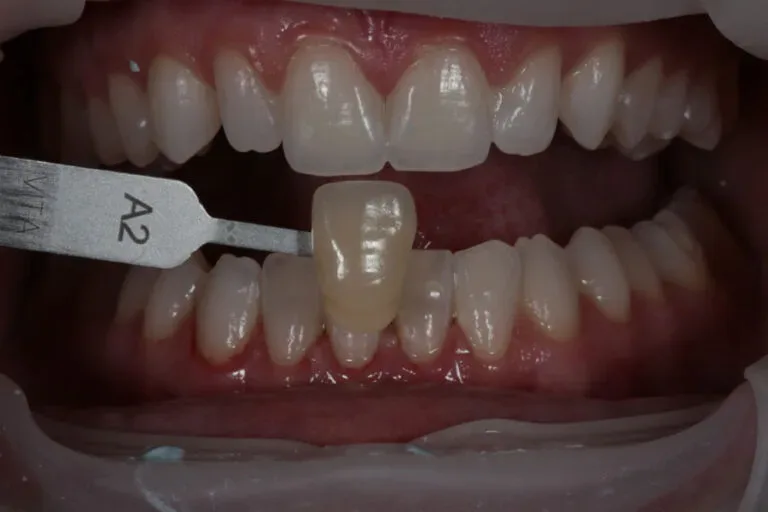
- Examination and cleaning (first visit, 45–60 minutes). I examine the teeth and gums, record the starting shade and check whether anything needs treating first. Professional removal of tartar and plaque is a prerequisite, because the gel does not work evenly on deposits. If the teeth are healthy, whitening can be done the same day.
- Gum protection. I cover the lips and gums with a liquid dam that is light-cured, so the gel reaches only the enamel.
- Gel application and light activation (60–90 minutes). I apply the whitening gel in three to four cycles of 15–20 minutes each and activate it with the LED lamp. Between cycles I check sensitivity and shorten the last cycle if needed.
- Finishing. I remove the gel, coat the teeth with a nano-hydroxyapatite or fluoride preparation that calms sensitivity, and measure the new shade.
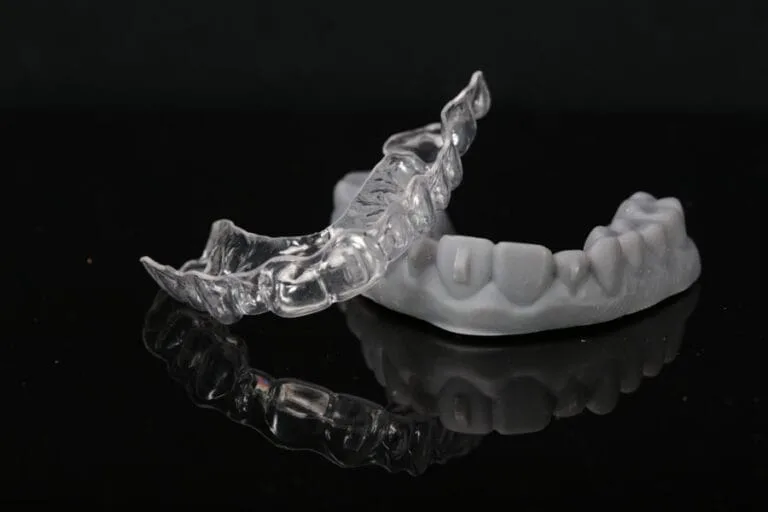
- Home trays (optional). For longer-lasting results we can make thin transparent trays from an impression of your teeth, which you use at home with a milder gel to refresh the colour once every few months.
The whole procedure is usually completed in one or two visits. Teeth continue to lighten for 24–48 hours after whitening, so we assess the final shade only after two days.
Price
| Service | Price | What it includes |
|---|---|---|
| In-office teeth whitening | 350 € | examination, shade recording, gum protection, 3–4 gel cycles with LED lamp, remineralisation |
| Panoramic X-ray / X-ray | 25–80 € | imaging when findings or symptoms call for a check of roots and bone |
| Filling | 80–130 € / tooth | replacement of old fillings that no longer match after whitening |
| Ceramic crown | 250–390 € | when a new crown in a lighter shade is planned in the visible zone |
A written treatment plan with the final price is prepared at the first visit (50 € with a panoramic X-ray, 80 € with a 3D CBCT). If you are not combining whitening with other procedures, imaging is usually not needed and the first visit consists only of the examination and cleaning. The Slovenian health insurance ZZZS does not cover cosmetic whitening.
After the procedure
For the first 48 hours the so-called “white diet” applies: no coffee, tea, red wine, cola, tomato sauce, turmeric or tobacco, because the enamel is more porous during this time and takes up pigments. Sensitivity to cold and brief “zings” in the teeth are normal in the first 24–48 hours and pass on their own; a toothpaste for sensitive teeth and avoiding very cold or hot food help.
The result lasts 1–3 years, depending mostly on habits. Smokers and coffee lovers should expect a shorter period, while patients with home trays extend it with occasional top-ups. Whitening can be repeated, but I recommend a gap of at least 12 months. A professional cleaning every 6–12 months preserves the colour and doubles as the regular check-up.
Why Koderman
- We always examine and clean before whitening, so we never whiten over decay or inflamed gums.
- We use professional gel at a concentration permitted only in a dental practice, not home-use products.
- If you are planning crowns, fillings or implants, everything is coordinated by one provider and in the right order.
- No waiting lists, an appointment usually within 7–14 days.
- We speak Slovenian, German, English and Croatian.
Frequently asked questions
How much does teeth whitening cost in Ptuj?
In-office whitening with an LED lamp costs 350 €. The price includes the examination, gum protection, all gel cycles and remineralisation. Home trays for maintenance are charged separately; you receive the price in the written plan.
Does whitening hurt?
The procedure itself does not hurt. Some patients feel increased sensitivity to cold and brief stabbing sensations in the first 24–48 hours; this passes on its own. During the procedure I monitor sensitivity and shorten the last cycle if needed.
Does whitening damage the enamel?
Professional whitening under a dentist's supervision does not thin or damage the enamel. Peroxide breaks down pigments but does not remove mineral structure. The damage is done mainly by aggressive home methods such as baking soda, lemon or charcoal, which mechanically abrade the enamel.
By how many shades do teeth get lighter?
Realistically by 2–8 shades on the VITA scale. Yellowish teeth respond best, greyish teeth and tetracycline staining less well. We measure the starting shade before the procedure so you can compare the result.
Which is better, whitening in the practice or at home with trays?
In-office whitening gives a result in a single visit and under supervision. Home trays with a milder gel need 10–14 days of wear, but they are an excellent complement for maintenance. In my practice I see the best longevity with a combination of both.
Do crowns and fillings whiten too?
No. Ceramic and composite do not change colour. That is why whitening is always planned before prosthetic work: first we whiten the natural teeth, and after two weeks, once the colour has settled, we make new crowns or replace fillings in a matching shade.