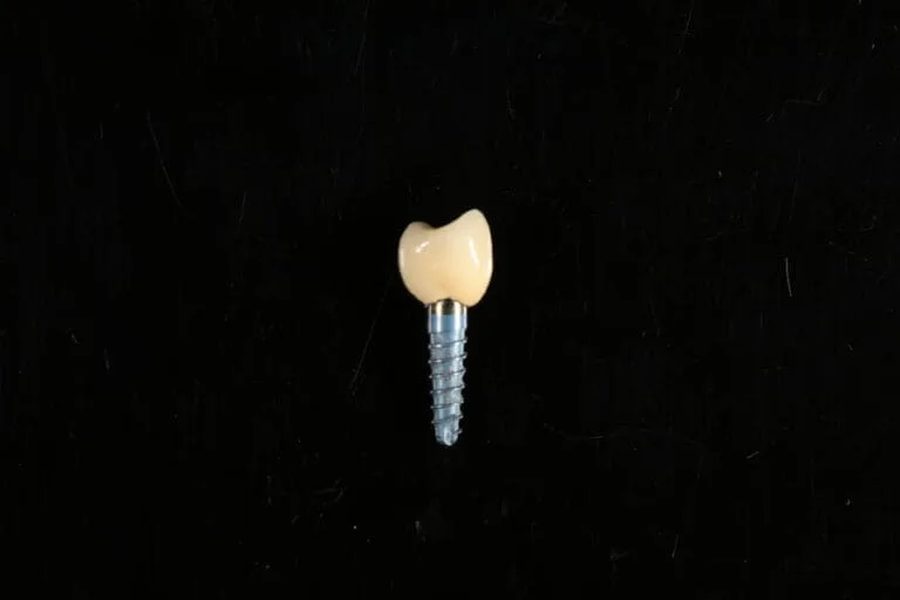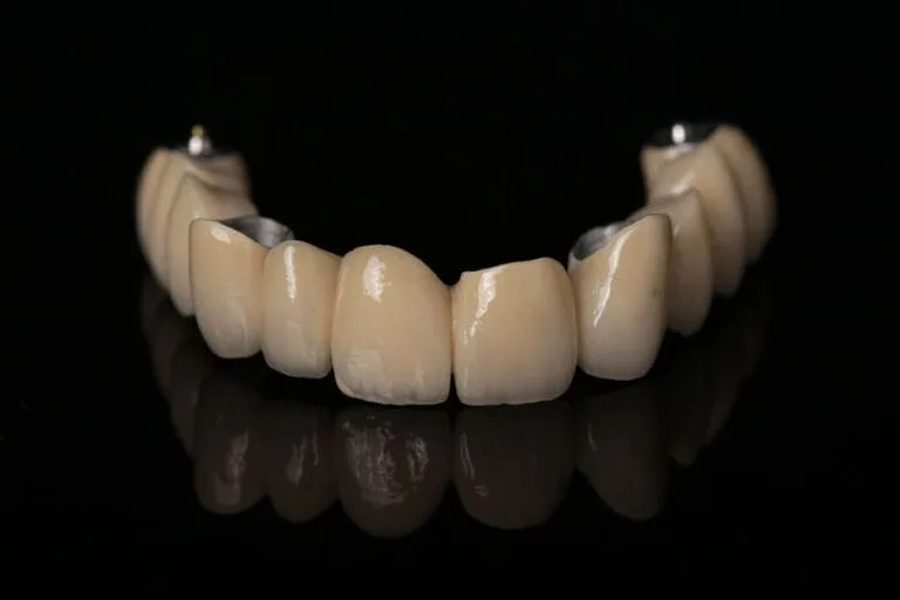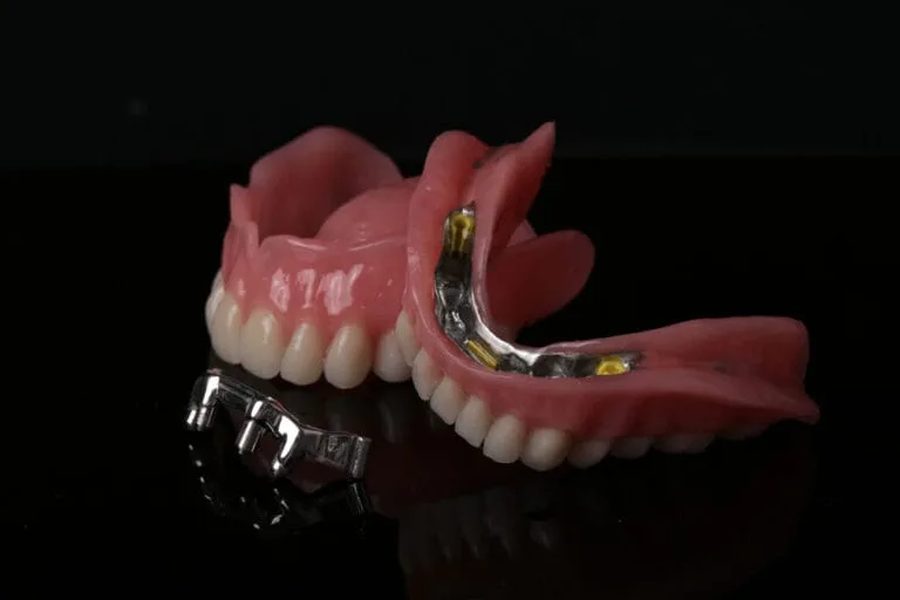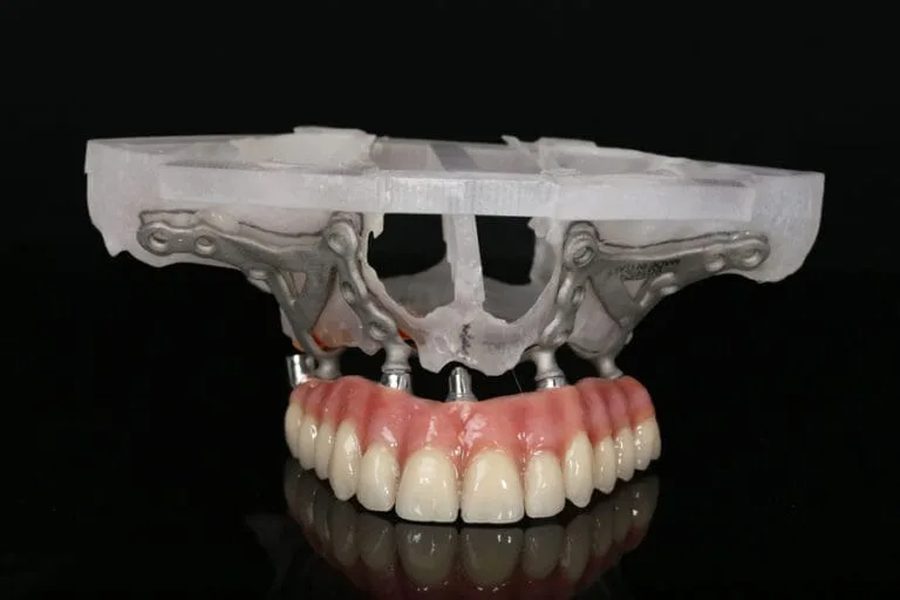
A dental implant is not “rejected” by the body in the true sense of the word – titanium is biologically inert and allergies to it are extremely rare. What patients call rejection is really one of two things: either the implant failed to fuse with the bone in the first months, or the bone around it has started to disappear years later because of inflammation. In 95–98 % of implants this does not happen within ten years; in 2–5 % it does – and those are precisely the cases you need to recognise early, because that is when they are almost always fixable.
What “rejection” of an implant really means
In my practice I hear the word rejection almost every week. I understand it, but clinically it is misleading, because patients picture an immune response, as with transplanted organs. With an implant, something else is going on.
The success of an implant depends on osseointegration – the process in which bone cells grow directly onto the titanium surface and anchor the implant firmly. It takes 3–6 months. If that bond never forms or is lost later, the implant fails. The cause is almost always mechanical or bacterial, not immunological.
I distinguish three conditions that patients often confuse:
- Normal healing – uncomfortable, but expected and limited in time.
- Early implant loss – osseointegration failed, usually within the first 3–6 months.
- Late problems – peri-implant mucositis (gum inflammation, reversible) and peri-implantitis (inflammation with bone loss), which appear years after placement.
What is normal after surgery
The first days after placement are stressful for many people because they do not know what to expect. This is the usual course:
- Swelling peaks on the second or third day and then subsides. After larger procedures (several implants, bone grafting) it is more pronounced.
- Mild to moderate pain for the first 2–4 days, which you manage with ibuprofen or paracetamol. Every day should be a little better.
- Bruising on the cheek or neck that changes colour and disappears within a week.
- Slight bleeding from the wound during the first 24 hours.
- Tenderness when chewing on that side for a few weeks.
The key word is direction: the symptoms ease from day to day. If they get worse after the third day, that is no longer normal healing. I have described what patients actually feel during the procedure in the article Do implant procedures hurt.
Early implant loss: signs in the first months
Early failure happens before the implant takes on the load of a crown. The bone has not grown around it; instead, soft connective tissue has formed. The signs:
- Implant mobility. A healthy implant does not move by a tenth of a millimetre. If you feel it “wobbling”, do not wait for your check-up.
- Pain that does not subside or returns after the first week, especially under pressure on the implant.
- Pus or an unpleasant taste from around the wound.
- Red, swollen gum that has not settled after two weeks.
- A bright halo around the implant on the X-ray (radiolucency), which I see and you do not – which is why check-ups matter.
The reasons are usually overheating of the bone during drilling, insufficient primary stability, infection, premature loading or simply poor bone quality that could not be fully assessed in advance.
Late problems: mucositis and peri-implantitis
After successful osseointegration, the implant’s greatest enemy is bacterial plaque, the same plaque that causes periodontitis around natural teeth. The difference is that an implant has no periodontal ligament to slow the spread of inflammation into the depth.
Peri-implant mucositis
Inflammation of the soft tissues around the implant without bone loss. The gum bleeds when brushing, is red and slightly swollen, and there is often no pain. It is completely reversible if treated in time – with professional cleaning and improved home care the tissue settles within a few weeks.
Peri-implantitis
If mucositis is left untreated, the inflammation spreads into the bone. The bone starts to recede, the pocket next to the implant deepens, pus may drain from it, and in advanced cases the implant becomes mobile. The bone loss is irreversible – it can only be partially rebuilt, and only surgically. That is why any bleeding around an implant is a reason to visit, not to wait.
Timeline: what is normal and when to call
| Period | Normal | Call us |
|---|---|---|
| Days 1–3 | Swelling increasing, moderate pain, bruising, slight bleeding | Bleeding you cannot stop by biting on gauze; pain that medication does not relieve; fever above 38 °C |
| Weeks 1–2 | Swelling subsiding, pain fading, stitches can be removed | Pain increasing after day 5; pus, odour or bad taste; open wound with the implant visible |
| Months 1–3 | No pain, pale pink gum, site not tender | Any movement of the implant; pain returning under pressure; red, swollen gum |
| Months 3–6 | Osseointegration completing, crown being made | Pain or a sound when the abutment is tightened; implant moving under load |
| Year 1 and beyond | Implant functions like your own tooth, gum does not bleed | Bleeding when brushing, gum recession, visible implant threads, loosening of the crown or implant |
Call us the same day if …
- the implant or the crown on it moves,
- pus drains from around the implant or you have a persistent bad taste,
- you have a fever above 38 °C more than one day after surgery,
- pain increases after the third day instead of easing,
- swelling keeps growing after the third day or makes swallowing difficult,
- you notice numbness of the lip or chin that does not go away after the anaesthetic wears off.
None of these signs necessarily means the implant is lost. They do mean I need to look today, not in a week.
Why an implant fails: risk factors
It is better to know your risk in advance than to look for someone to blame afterwards. This is how I weigh the factors in my practice:
| Factor | How much it weighs | What you can do |
|---|---|---|
| Smoking | Roughly 2–3 times the risk of failure; higher still for peri-implantitis | Stopping at least 2 weeks before and 8 weeks after surgery reduces the risk considerably |
| Poorly controlled diabetes | Slower healing, higher susceptibility to infection | With well-controlled disease (HbA1c below 8 %) the risk is comparable to healthy patients |
| Untreated periodontitis | Bacteria migrate from the teeth to the implant | Treating the gums before placement is a condition, not a recommendation |
| Teeth grinding (bruxism) | Overload, fractured components, bone loss | Night guard, more implants to spread the forces |
| Poor oral hygiene | The main cause of peri-implantitis | A daily routine and check-ups every 6 months |
| Bisphosphonates and similar drugs | Disturbed bone metabolism; serious risk with intravenous forms | Tell me about all your medication, including osteoporosis drugs |
| Insufficient bone without grafting | The implant has no support, threads are exposed | A 3D CBCT shows in advance whether a sinus lift or bone graft is needed |
| Immediate loading in soft bone | Micromovements prevent integration | An honest assessment of stability during surgery; sometimes it is better to wait |
Some risk always remains – even in a non-smoker with excellent hygiene an implant occasionally fails for no clear reason. That is the 2–5 % we prepare for with the warranty.
What we do at Koderman when problems arise
Examination and 3D imaging
First I look, palpate and measure the pocket depth around the implant. Then we take a 3D CBCT scan (80 €), because a two-dimensional X-ray does not show bone loss on the tongue or palate side. Only then do I know whether it is mucositis, peri-implantitis or an implant that never integrated.
Treating mucositis
Professional cleaning of the implant surface with special titanium-friendly instruments, rinsing with chlorhexidine and adjusting your home care. Check-up after 4–6 weeks. In the great majority of cases this is enough.
Treating peri-implantitis
Once the bone is affected, cleaning through the gum is not enough. I open the area surgically, thoroughly decontaminate the implant surface and, where needed, replace the lost bone with a bone substitute (250–800 €). The goal is to stop the process and keep the implant for many more years. Success depends above all on how early you come.
Removal and re-implantation
If the implant is mobile, we do not try to save it. I remove it in a short, usually straightforward procedure, clean the site and let the bone heal for 2–3 months. Then I place a new implant – often slightly wider or longer, sometimes with bone grafting.
Our rule: if osseointegration fails within the first 6 months, I place a new implant free of charge. The Sweden & Martina implant body itself carries the manufacturer’s lifetime warranty. The full terms are in the article on the warranty on dental implants.
How to prevent problems
An implant cannot get decay, but it can get inflamed. That is why it needs as much care as your own teeth, if not more:
- Brush twice a day with a soft brush, focusing on the junction between crown and gum.
- Interdental brushes of the right size every evening – floss alone is often not enough around an implant.
- A water flosser, especially with implant-supported bridges and All-on-4, where nothing else reaches under the framework.
- Check-up and professional cleaning every 6 months, every 3–4 months for smokers and patients with a history of periodontitis.
- Quitting smoking before surgery – if there was ever a right moment, this is it.
- A night guard if you grind your teeth.
Frequently asked questions
Can a rejected implant be replaced with a new one?
Yes, in the great majority of cases. After removal we let the bone heal for 2–3 months and then place a new implant. The success rate of the second attempt is slightly lower than the first but still high, especially if we have found and eliminated the cause of the first failure.
Is titanium allergy real?
A proven titanium allergy is extremely rare and described in the literature only in isolated cases. What gets attributed to an “allergy” is almost always an infection or mechanical overload. If you have a proven metal sensitivity, ceramic (zirconia) implants from the same manufacturer’s system are available; they typically cost 300–500 € more than titanium, and you will receive an exact quote at the consultation. More in the article on dental implants.
Will the crown have to come off to treat the inflammation?
Not for mucositis. For the surgical treatment of peri-implantitis I often unscrew the crown or bridge temporarily to reach the whole implant surface and put it back after the procedure. If the implant has to be replaced, a new crown is needed as well (250–390 €).
Does insurance cover the repair?
The Slovenian public insurer ZZZS covers neither dental implants nor their complications – more in the article Does ZZZS cover dental implants. With us, the replacement implant in the first 6 months is covered by the warranty. Part of self-paid dental costs may qualify as a special tax relief in Slovenia under specific conditions; check the current rules with the tax authority FURS or your accountant.
How quickly can you see me if a problem appears?
For patients with signs of a complication we make time the same or the next working day, regardless of where the implant was placed. For regular consultations you usually get an appointment within 7–14 days.
Book a consultation
If you have pain or bleeding around an implant, or the feeling that it moves, do not wait for your next routine check-up. The first examination with a panoramic X-ray costs 50 €, with a 3D CBCT 80 €, and the treatment plan is non-binding.
- Phone: +386 51 452 627
- E-mail: info@koderman.eu
- Address: Hreničeva ulica 3, 2250 Ptuj
- Opening hours: Mon 9–16, Tue–Fri 9–15
Author: Dr. Antonio Koderman, dr. dent. med. & MSc of Implantology — implantology specialist, Implantološki center Koderman, Ptuj.