Root canal treatment, commonly called nerve treatment or endodontic treatment, removes the inflamed or dead dental pulp, cleans and disinfects the canals and seals them tightly. This keeps your own tooth, which would otherwise have to be extracted; the success rate is 85–95 % and treatment is usually finished in one or two visits.
Who it is for
- Inflammation of the dental pulp (pulpitis): strong, throbbing pain that wakes you at night or lingers long after hot or cold.
- Dead pulp (necrosis) after deep decay, a blow or a large filling; the tooth may darken and at first not hurt at all.
- Pus-forming infection at the root (abscess, granuloma): swelling, tenderness when biting, sometimes a fistula on the gum or a shadow on the X-ray.
- Retreatment (revision) of an old, poorly filled canal that is causing trouble again.
- Less sensible when the tooth is cracked down to the root, when too little crown is left for a later crown, or when the tooth has lost its firm bone support to periodontitis. Then I honestly recommend extraction and an implant.
How it works
- Examination and imaging: an X-ray of the tooth (25–80 €); for complicated roots or a retreatment a 3D CBCT (80 €), which shows the number, curvature and length of the canals. At the first visit you receive a written plan with the price.
- Anaesthesia and isolation: the tooth is numbed and separated from saliva with a rubber dam so that no bacteria enter the canals.
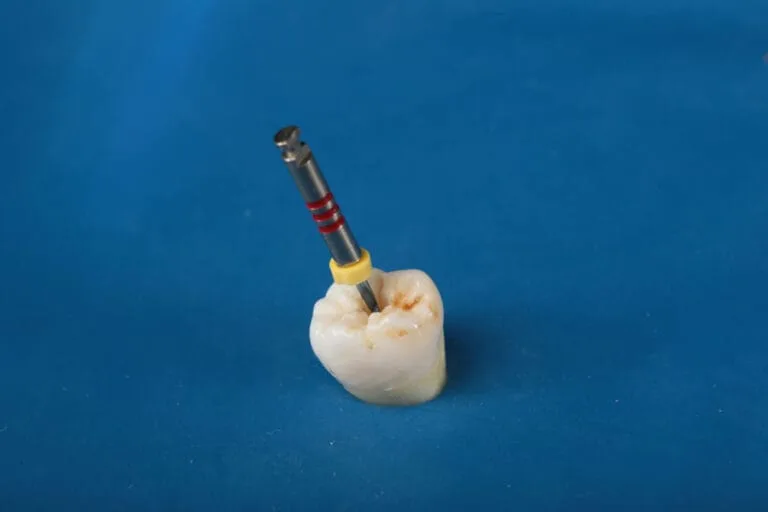
- Opening and cleaning: we reach the pulp through the crown, clean and shape the canals with rotary nickel-titanium instruments, measure the length electronically and confirm it with an X-ray. The canals are rinsed with disinfectant throughout.
- Filling: the cleaned canals are sealed tightly with gutta-percha and sealer and the tooth is closed. In a severe pus-forming infection we place a medicament in the canal for 1–2 weeks and fill at the second visit.
- Control X-ray and final restoration: a smaller tooth gets a filling; a molar usually needs a crown after treatment because it becomes brittle. One visit takes 60–90 minutes; an incisor with one canal is often finished in one visit, a molar with three or four canals in one or two.
Price
| Service | Price | What it includes |
|---|---|---|
| Root canal treatment | 120 € / canal | Anaesthesia, rubber dam, rotary cleaning, disinfection and filling of the canal, control X-rays |
| Dental X-ray | 25–80 € | Diagnostic image before treatment |
| 3D CBCT | 80 € | For complicated canals and retreatments |
| Composite filling after treatment | 80–130 € | Final sealing of the tooth |
| Ceramic crown | 250–390 € | Protection of the brittle tooth after treatment |
The price is charged per canal: an incisor with one canal costs 120 €, a premolar with two 240 €, a molar with three canals 360 €. Add the final restoration of the tooth. You receive the written treatment plan with the final price at the first visit (50 € with a panoramic X-ray, 80 € with 3D CBCT). The service is self-paid; part of dental costs may qualify for tax relief, but check the current rules of the Slovenian tax authority FURS or of your home country.
After the treatment
For the first few days the tooth is tender when biting, as the tissue around the root tip settles; a mild painkiller such as ibuprofen or paracetamol is usually enough. Until the final restoration, do not bite anything hard with the tooth; it is weakened and the temporary filling is not made for nuts. If the swelling grows or the pain increases after three days, call us. The treated tooth no longer has a nerve, but it can still decay or fracture, so clean it like the others and come for a check-up with an X-ray after 6–12 months so we can confirm the bone is healing. A successfully treated tooth protected by a crown lasts decades, often a lifetime.
Why Koderman
- 3D CBCT in-house: hidden fourth canals and curved roots are visible before we start, not discovered mid-treatment.
- Work under a rubber dam with rotary instruments and electronic length measurement, the standard that decides the success rate.
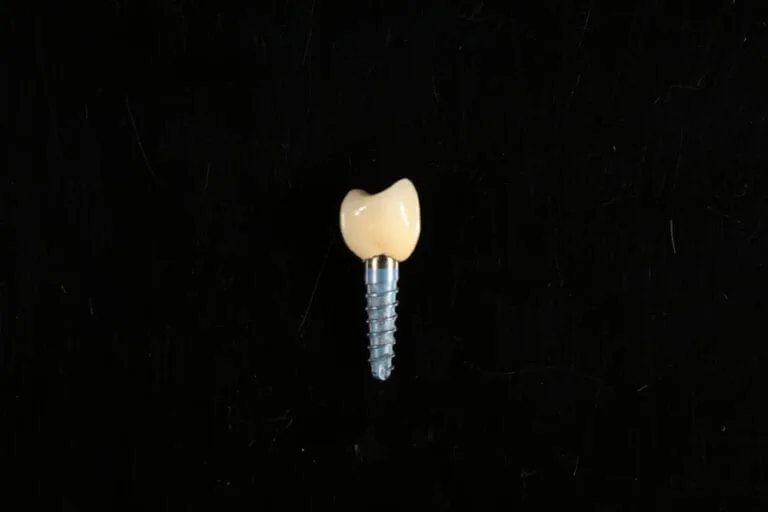
- The same doctor takes the tooth through to the end: treatment, crown and, if the tooth cannot be saved, a Sweden & Martina implant.
- No waiting lists; with acute pain we usually see you within a few days.
- We speak Slovenian, German, English and Croatian.
Frequently asked questions
How much does root canal treatment cost?
120 € per canal. An incisor usually has one canal, a premolar one or two, a molar three or four; so a molar costs 360–480 €. Add the X-ray and the final restoration of the tooth.
Does root canal treatment hurt?
The procedure is done under local anaesthesia and does not hurt; a badly inflamed tooth sometimes needs an extra dose of anaesthetic. The pain that brought you in usually eases the same day once the inflamed pulp is removed.
How many visits are needed?
One or two. Vital teeth with pulpitis are usually treated in one visit, teeth with a pus-forming infection in two, with a medicament in the canal in between.
What is the success rate?
85–95 % for a first treatment, somewhat lower for retreatments. If the infection does not settle, the next step is sometimes surgical removal of the root tip, otherwise extraction and an implant.
Treat, or extract and place an implant?
If the tooth has enough sound crown and root, keeping it is cheaper and faster: treatment plus a crown costs roughly 400–900 €, an implant with a crown from 900 € and needs 3–6 months of healing. When the tooth is cracked or has no bone support, an implant is more reliable in the long run, and that is what I recommend then.
Does insurance cover root canal treatment?
Not with us, as we are not a contracted provider of the Slovenian health insurance ZZZS. The service is self-paid, but there is no waiting, and the tooth is treated with a rubber dam and rotary instruments regardless of any insurance standard; whether your insurer at home reimburses part of it is best checked in advance with our written estimate.