Quick answer: Does the ZZZS cover dental implants?
NO — the ZZZS (Slovenian national health insurance) does not cover dental implants.
Dental implants fall under _self-pay services_, which means the patient pays for them in full themselves.
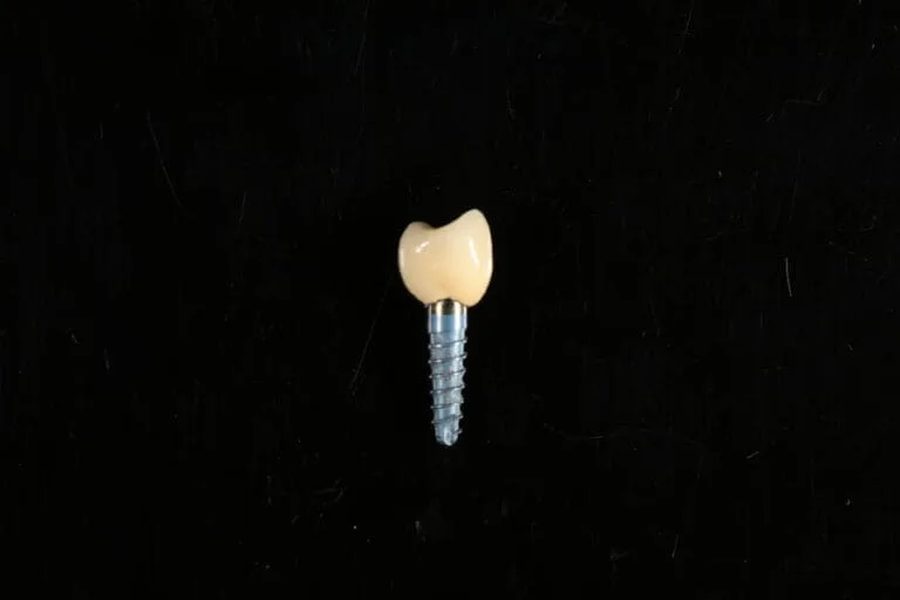
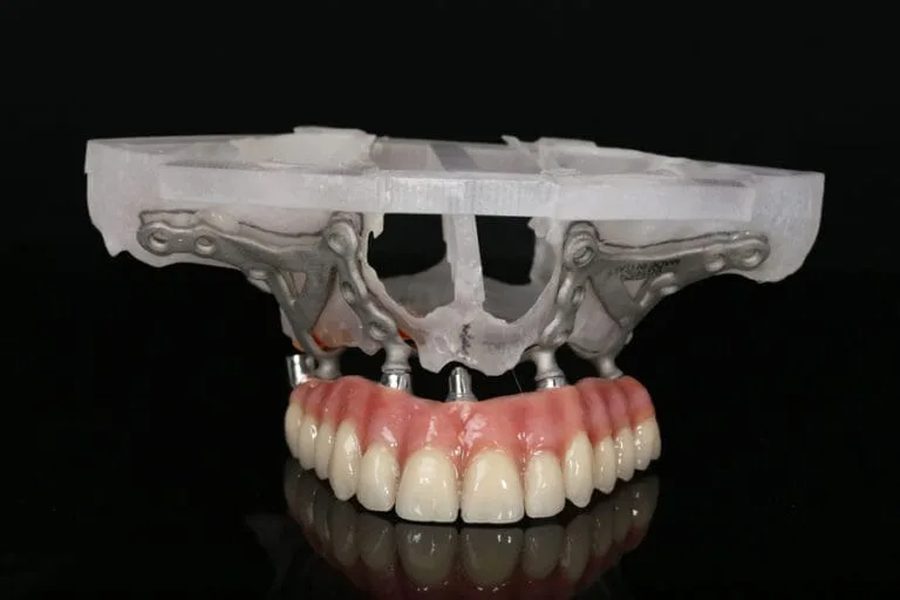
This applies both to individual implants and to All-on-4, subperiosteal implants and all related procedures.
Rare exceptions: in individual cases the ZZZS may cover part of the cost — more on this in the section below.
What the ZZZS ACTUALLY covers in dental care
- A routine dental examination (once a year)
- Emergency dental care (severe pain, bleeding)
- Treatment of caries in children up to the age of 18
- Orthodontic treatment for children (up to the age of 18, with an indication)
Completely NOT covered:
- Dental implants
Why are dental implants not covered?
The reason lies in the ZZZS categorisation: dental implants are classified as an _“aesthetic”_ or _“elective”_ procedure, not as _“medically necessary”_. The ZZZS works on the logic that cheaper alternatives exist (removable dentures, bridges), even though they are functionally and medically inferior.
This will not change in the foreseeable future — Slovenia's health insurance system has no funds allocated for the widespread coverage of implants.
Rare exceptions — when the ZZZS CAN cover the cost
In very rare cases the ZZZS may partly or fully cover dental implants:
1. Trauma (injury)
After a serious injury (e.g. a traffic accident, a workplace accident) in which the patient has lost teeth and the need for an implant for reconstruction is documented, the ZZZS may contribute to the funding.
2. Congenital anomalies
In children and adolescents with congenital dental anomalies (e.g. _oligodontia_ — teeth missing from birth), the ZZZS may cover part of the cost.
3. Oncology patients
After cancer treatment in the jaw/head/neck area in which teeth or bone have been lost, the ZZZS may contribute.
The reality: even in these cases approval is rare and requires explicit documentation. ZZZS does not cover implants, except in rare cases after injury or congenital defects, so in Slovenia they are practically always self-paid.
Supplementary health insurance — does it help at all?
Many patients have supplementary health insurance (Vzajemna, Triglav, Generali, Adriatic Slovenica). The question: does it cover dental implants?
Brutally honest:
- Basic supplementary insurance (about 35 €/month) does NOT cover dental implants. It only covers the difference between the ZZZS tariff and the actual bill — and since there is no ZZZS tariff for implants at all, there is nothing to cover.
- Premium dental insurance (e.g. Vzajemna Zobi Plus, Triglav Dental) partly covers prosthetics (crowns, bridges), but does not cover the implants themselves. It covers part of the cost of the crown on the implant according to the terms of the policy; no policy covers the implant itself.
- Annual limits are typically 500–1,500 €, which is not much against a 5,500 € All-on-4.
Important: before taking out premium insurance, always consider whether you want dental implants in the next 1–2 years — insurance policies have a waiting period (6–12 months), meaning they do not pay for the service during that time.
Tax relief: not in Slovenia, yes in Austria and Germany
Slovenian income tax has no relief for medical costs, so dental costs cannot be claimed here. If you are tax-resident in Austria or Germany, you may be able to claim treatment costs, including treatment in Slovenia, as an extraordinary burden (außergewöhnliche Belastung) under your own country's rules; we issue the invoice in your language. This is not tax advice; ask your tax adviser.
For patients from Austria: dental costs, including treatment abroad, count as an extraordinary burden with a deductible of 6–12 % of annual income (3,000 € at an income of 30,000 €); only the part above the deductible reduces the tax base, ÖGK reimbursements are deducted and cosmetic treatments do not count. Submit the invoices to ÖGK first, then claim the rest in the annual tax assessment (form L 1ab). Sources: Austrian Ministry of Finance and Arbeiterkammer, 2026.
Financing options at Koderman
At the Koderman Implantology Centre we offer several payment methods:
The simplest method. Payment can be split across the clinical stages.
We accept Visa, Mastercard, Maestro. No surcharge.
For procedures over 1,000 € we offer interest-free instalment payment.
No interest, no paperwork, no banks.
Banks offer health loans at favourable interest rates (3–6 %).
Price vs value — is it worth it?
Working out the cost per year of use, implants are comparable to bridges, but are a considerably more comfortable solution.
Frequently asked questions about the ZZZS and dental implants
Will the ZZZS cover dental implants in the future?
In our view, not in the foreseeable future (5–10 years). The political and financial reality gives no sign of change.
If I am disabled, do I get a discount or coverage?
Disability in itself does not mean the ZZZS will cover implants. However, if the disability is linked to the loss of teeth for a medical reason (cancer, trauma), you can apply for special approval from the ZZZS.
Are dental implants tax-deductible?
Slovenian income tax has no relief for medical costs, so dental costs cannot be claimed here. If you are tax-resident in Austria or Germany, you may be able to claim treatment costs, including treatment in Slovenia, as an extraordinary burden (außergewöhnliche Belastung) under your own country's rules; we issue the invoice in your language. This is not tax advice; ask your tax adviser.
Can I pay for dental implants through my company (sole trader, limited company)?
Not in the normal course, because they are categorised as a personal health cost. Consult an accountant about any special cases.
Do you offer a discount for older people at Koderman?
For patients over the age of 65 we offer a 10 % discount on all implants and prosthetics (for example an implant 650 € → 585 €). Ask at the consultation.
Book a consultation
Not sure which solution is the most favourable for you? At the Koderman Implantology Centre in Ptuj we offer a first visit with a panoramic X-ray for €50 or with a 3D CBCT scan for €80.
- Phone: +386 51 452 627
- E-mail: info@koderman.eu
- Address: Hreničeva ulica 3, 2250 Ptuj
- Opening hours: Mon 9–16, Tue–Fri 9–15
Author: Dr Antonio Koderman, dr. dent. med. & msc of implantology — implantologist, owner and head of the Koderman Implantology Centre in Ptuj.